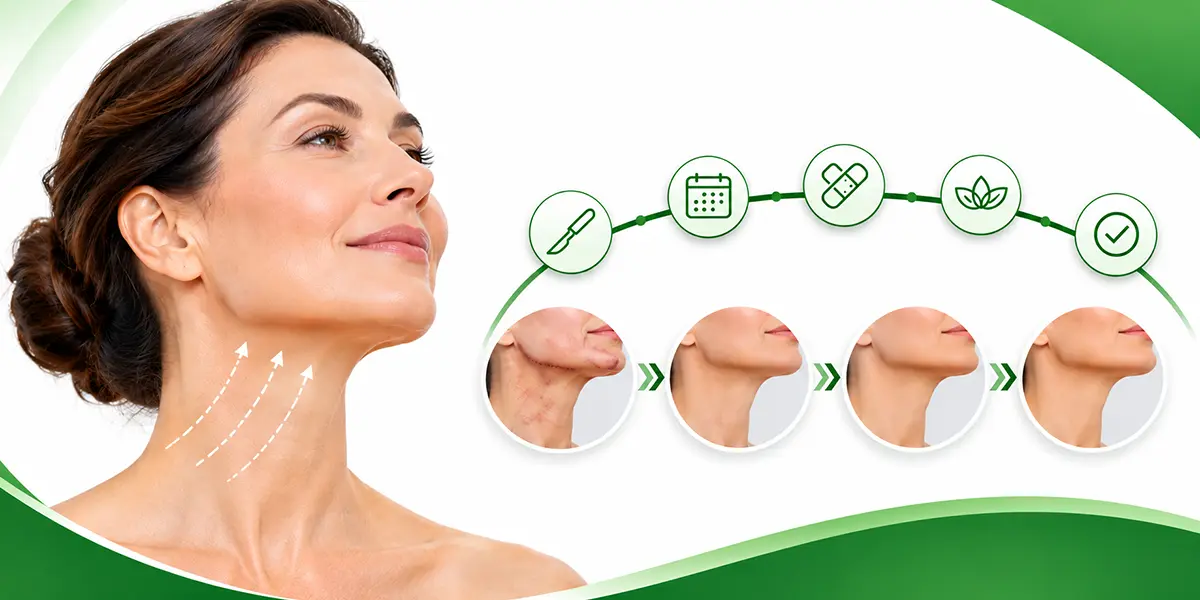
Most people think healing from cosmetic work means weeks of hiding in a dark room in agony. That is rarely true. Understanding your actual Neck Lift Recovery Time helps you plan work and family life without guessing. You will deal with weird tightness and some stubborn swelling rather than sharp pain. Knowing what happens each week takes the fear out of booking your Neck Lift Surgery. We are laying out the real timeline of soreness and bruising so you know what your mirror will show you.
Expect Weird Tightness Instead of Sharp Pain
Patients always ask about the pain first. You will not feel sharp or stabbing agony after the numbing medicine wears off. Instead your neck will feel like you are wearing a turtleneck that is two sizes too small. That snug feeling comes from the surgeon tightening the platysma muscle and removing loose skin underneath your jaw. It feels strange. Turning your head side to side will feel stiff and awkward for the first several days. Most people take prescription pain pills for maybe forty-eight hours before switching to plain over-the-counter relief. Numbness around your ears and lower chin is also completely normal because tiny skin nerves need time to wake back up. You might also feel little zings or mild tingling as those nerves reconnect over the next few weeks. It is annoying but harmless.
Days One Through Seven Bring Peak Swelling and Bruising
The first seventy-two hours are the roughest part of the whole process. Swelling builds fast and usually hits its highest point around day three. You will go home wrapped in a supportive dressing or a Velcro chin strap that holds your tissues in place. Keep it on. Sleeping propped up on two or three pillows is mandatory during this first week so gravity can drain the extra fluid away from your face. Rolling onto your side puts uneven pressure on fresh stitches and makes swelling worse. Bruising often starts near the jawline and slowly drifts downward onto your upper chest as it fades from dark purple to yellow.
You will feel tired and want to rest on the couch with cold compresses resting gently near your cheeks. Take short walks around your living room every few hours to keep your blood moving and prevent stiffness. Stick to soft foods like yogurt and soup for the first few days because heavy chewing pulls on your jaw muscles. By day seven your surgeon usually removes any external stitches hidden behind your ears and under your chin.
Week Two Lets You Return to Desk Work and Errands
Something clicks around day ten. The heavy fog lifts and you finally start recognizing yourself in the bathroom mirror again. Most of the dark bruising fades enough that a little concealer or a collared shirt hides the rest. Looking at typical Neck Lift Recovery Time patterns across our clinic, patients with office jobs usually log back onto their computers around the two-week mark. You still cannot lift heavy grocery bags or hit the gym yet. Raising your blood pressure too early makes your neck throb and swell right back up. Even bending over to tie your shoes or pick up a toddler can send extra blood rushing to your face.
When patients visit us for Neck Lift Surgery in Langhorne, Dr. Aaron Shapiro and Dr. Durvi Patel always stresses patience during this middle stretch. We check your incisions closely and tell you exactly when you can ditch the chin strap during the daytime. Most folks still wear that strap while sleeping at night for another week just for extra support.
Weeks Three and Four Clear You for Light Workouts
Your neck will look pretty great to strangers by week three. Nobody at the grocery store will know you had work done. Up close you might still notice mild firmness or small bumpy spots under your skin. That is just normal healing tissue softening up. Gently massaging those firm areas with clean fingertips after your doctor approves it helps smooth everything out faster. Residual swelling tends to fluctuate depending on the time of day and what you ate for dinner. Salty takeout food or a glass of wine will make your jawline look puffier the next morning. Drink plenty of water.
Most surgeons clear you for light cardio and brisk walking during week three or four. Skip heavy weightlifting and intense yoga inversions until you get the official green light at your follow-up visit. Your skin still needs time to anchor firmly to the deeper muscle layers without extra strain.
Months Two Through Six Reveal Your Final Sharp Jawline
Healing does not happen in a straight line. One side of your neck might soften faster than the other side and that small difference can make you nervous. Relax. Your tissues are still settling down through month two and month three. The tight pulling sensation behind your ears slowly disappears as the skin stretches naturally when you look up or turn your head. Tiny incision lines turn from pink to pale white until they blend right into your natural skin creases.
Full Neck Lift Recovery Time takes roughly three to six months before every last bit of deep swelling vanishes. That final result is worth every day of wearing that annoying chin strap.
Simple Daily Habits Speed Up Your Healing Process
You control a big chunk of how smoothly your body bounces back. Skipping nicotine is rule number one because smoking starves healing skin of oxygen and causes ugly scars. Even nicotine patches or vapes constrict blood vessels and slow down your healing. Stay out of hot showers and saunas for the first few weeks since heat triggers fresh swelling. Lukewarm water is your best friend during the first month. Protect your healing incision lines from direct sunlight with broad-spectrum sunscreen or a wide hat so they do not darken permanently.
Eating lean protein and fresh vegetables gives your body the exact building blocks it needs to repair tissue fast. We walk every patient through these small daily habits before they ever step into the operating room so nothing catches them off guard. Watching someone finally love their profile again is why our team loves this work.
Conclusion
Planning ahead makes a massive difference when you are considering Neck Lift Surgery in Philadelphia and the surrounding suburbs. Give yourself two solid weeks of downtime before scheduling big social events or work presentations. Listen to your body when it tells you to rest on the couch. Proper aftercare and realistic expectations keep your recovery calm and predictable from the first day until your final checkup.